The Ultimate Guide to Scholarships: Win Money for School in 2026

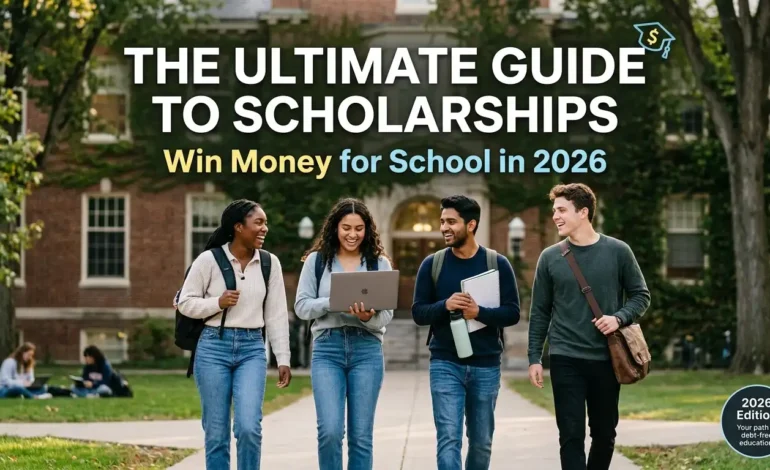
Are you a student—or a parent of one—looking for scholarships in 2026? Whether you’re in middle school, high school, or college, this guide covers every age group, scholarship type, and winning strategy. We go beyond lists, giving you step-by-step methods, insider tips, and global opportunities.
Table of Contents
- Why Scholarships Matter
- Types of Scholarships
- Scholarships by Age Group
- Global & International Scholarships
- Step-by-Step Strategy to Win Scholarships
- Scholarships for Students with Low GPA or No Experience
- Easy & Local Scholarships
- Scholarship Myths & Psychological Triggers
- Guides for Parents
- FAQs About Scholarships
1. Why Scholarships Matter
Scholarships are free money for school. They reduce student debt, fund tuition, and sometimes even cover living expenses. Combining scholarships with grants, 529 plans, and financial aid can make college affordable—even if you have a low GPA.
2. Types of Scholarships
| Type | Description | Example |
|---|---|---|
| Merit-Based | Reward academic or extracurricular excellence | Jack Kent Cooke Foundation |
| Need-Based | Focus on financial need | FAFSA, local grants |
| No-Essay Scholarships | Quick applications, no essays required | Bold.org No-Essay |
| Competition-Based | Essay, video, or project competitions | Breakthrough Junior Challenge |
| Creative Contests | STEM, art, film, or writing | Paradigm Challenge, StudentCam |
3. Scholarships by Age Group
Elementary & Middle School
- 3M Young Scientist Challenge
- International Young Eco-Hero Award
High School Juniors & Seniors
- Gloria Barron Prize
- Stossel Essay Contest
- My Impact Challenge
College & Graduate Students
- Jack Kent Cooke Foundation Scholarships
- ConnectHER Film Festival
4. Global & International Scholarships
Most websites focus only on the US and Canada. But international students can also apply:
- Commonwealth Scholarships – For students from Commonwealth countries
- DAAD Scholarships (Germany) – For international graduate students
- Global Citizen Scholarship – Open to students worldwide
Tip: Always check eligibility for your country; many “US scholarships” allow international students if they meet other criteria.
5. Step-by-Step Strategy to Win Scholarships
- Make a list of scholarships – Use platforms like Scholarships.com, Bold.org, or Scholarships360.
- Prioritize by deadlines and fit – Focus on scholarships that match your skills and needs.
- Perfect your essays and videos – Use storytelling, showcase leadership, and solve a problem.
- Collect strong recommendations – Teachers, mentors, or community leaders.
- Double-check eligibility and submission rules – Avoid disqualification on technicalities.
- Track your applications – Use a spreadsheet with deadlines, requirements, and status.
Winning Tip: Analyze past winners’ essays or projects for inspiration, but never copy.
6. Scholarships for Students with Low GPA or No Experience
- Beginner-Friendly Scholarships – Many focus on potential, community service, or creativity rather than grades.
- No-Experience Options – Start with small local scholarships to build a record.
- Example: Local Rotary Club scholarships, community foundation awards, or easy essay contests.
7. Easy & Local Scholarships
- High-Chance Scholarships – Often less than $1,000 but with low competition.
- Hidden Opportunities – Small organizations, local businesses, or niche interest groups.
- Strategy: Apply for 5–10 “easy” scholarships per month; odds are surprisingly good.
8. Scholarship Myths & Psychological Triggers
- Myth: “I won’t win anything.” – False. Thousands of scholarships go unclaimed every year.
- Myth: “Only perfect students succeed.” – False. Many scholarships reward effort, creativity, or need.
- Tip: Start early, organize applications, and track progress to reduce stress and confusion.
9. Guide for Parents
Parents play a crucial role in scholarship success:
- Help research scholarships that fit your child.
- Encourage essay drafts and practice interviews.
- Teach deadline management with a shared calendar.
- Celebrate small wins to build confidence.
-
FAQs: Scholarships 2026
Q1: Can international students apply for US or Canadian scholarships?
Yes! Many scholarships allow international students if they meet certain criteria. Always check the eligibility requirements, and search specifically for “scholarships for international students” to find suitable opportunities.Q2: What is the difference between merit-based and need-based scholarships?
- Merit-based scholarships reward academic, artistic, or extracurricular excellence.
- Need-based scholarships are awarded based on financial need. Some scholarships combine both criteria.
Q3: Are there scholarships for students with a low GPA?
Absolutely. Many scholarships focus on creativity, community service, leadership, or specific talents rather than grades. Look for “scholarships for average students” or “scholarships for beginners.”Q4: What are no-essay scholarships, and are they worth it?
No-essay scholarships require minimal effort, often just filling out a short form. They tend to be smaller awards but can add up quickly if you apply to several.Q5: How do I increase my chances of winning a scholarship?
- Start early and research thoroughly
- Tailor your essays or projects to the scholarship’s goals
- Get strong recommendations
- Avoid common mistakes like missing deadlines or submitting incomplete applications
Q6: Can middle school students apply for scholarships?
Yes! Competitions like the 3M Young Scientist Challenge and the International Young Eco-Hero Award are designed for younger students. Starting early builds experience for high school scholarships.Q7: How do I keep track of multiple scholarship applications?
Use a spreadsheet or digital calendar. Include columns for: scholarship name, deadline, requirements, submitted date, and follow-up actions. This helps prevent missed deadlines.Q8: Are there scholarships for students with no achievements or extracurriculars?
Yes. Many small or local scholarships value potential, effort, or community involvement. Start with “easy scholarships” or “hidden local scholarships” to build a track record.Q9: How much can I realistically earn from scholarships in one year?
It varies widely. Many students earn a few hundred dollars from small scholarships, while others secure $5,000–$20,000 annually. Applying consistently increases total awards.Q10: How can parents help their children win scholarships?
Parents can:- Research and shortlist scholarships
- Assist with essays and project planning
- Set up a schedule for deadlines
- Encourage confidence-building and celebrate wins