Philadelphia Scholarships for Private School: Eligibility, Programs, and Application Guide

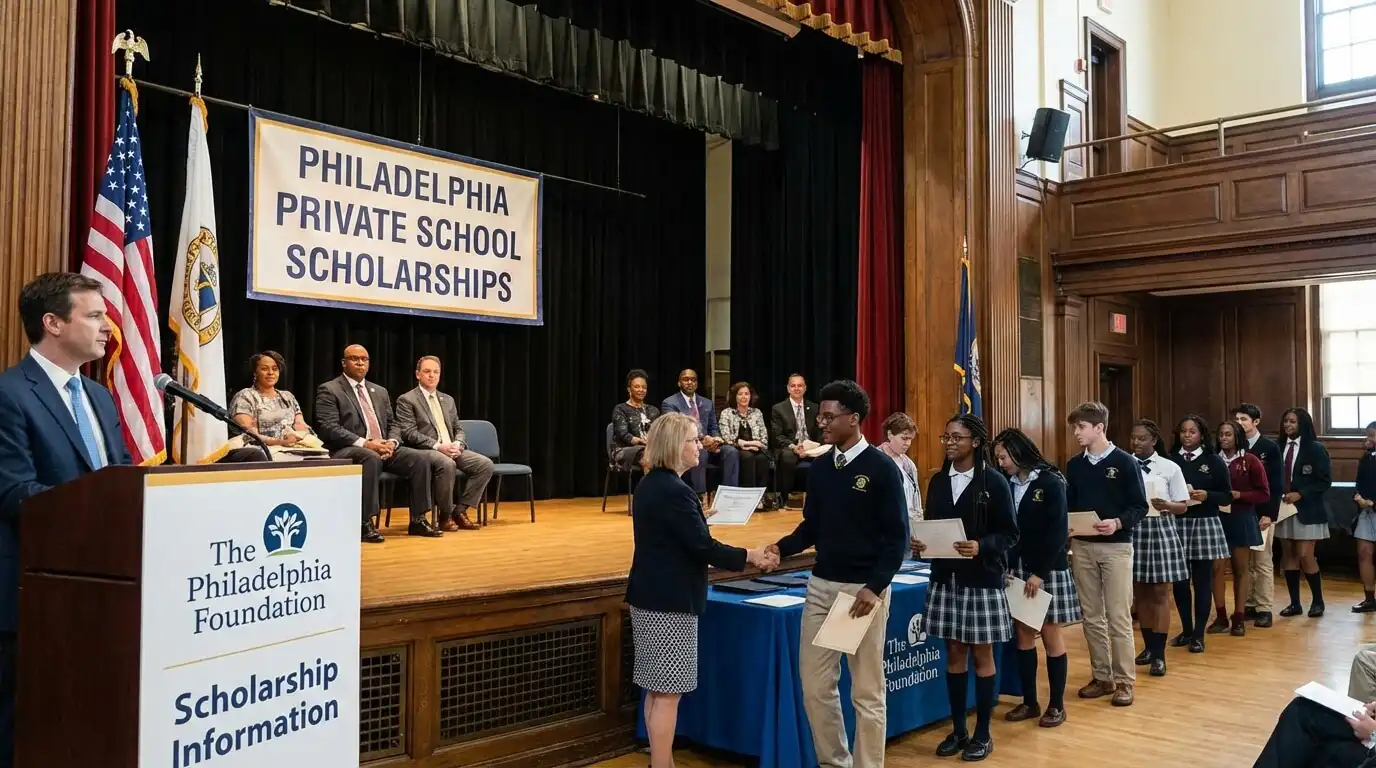
Philadelphia scholarships for private school help thousands of families access quality K-12 education despite rising tuition costs. Many parents in Philadelphia County choose private or parochial schools because of smaller class sizes, specialized academic programs, and faith-based education options. However, private school tuition can often exceed $8,000 to $20,000 per year.
To make private education more accessible, Pennsylvania offers several school choice programs and scholarship funds designed for low-income and moderate-income families. These programs are supported by nonprofit scholarship organizations, tax-credit initiatives, and private donors.
This guide explains the major scholarship programs in Philadelphia, eligibility requirements, application process, income limits, and how parents can secure tuition assistance for their children.
Major Philadelphia Scholarships for Private School Students
Several scholarship organizations operate in Philadelphia to provide financial assistance for students attending private and parochial schools.
Children’s Scholarship Fund Philadelphia (CSFP)
The Children’s Scholarship Fund Philadelphia (CSFP) is the largest provider of K-8 scholarships for private school education in the city.
CSFP provides partial tuition scholarships to students from low-income families so they can attend participating private schools across Philadelphia.
Key facts about CSFP:
-
Supports K-8 private school education
-
Scholarships are need-based
-
Selection occurs through a lottery system
-
Families must reapply each year
Thousands of students receive assistance through CSFP annually, making it one of the most influential education scholarship programs in Pennsylvania.
Educational Improvement Tax Credit (EITC)
The Educational Improvement Tax Credit (EITC) program is administered by the Pennsylvania Department of Community and Economic Development.
This program allows businesses to receive tax credits for donating to scholarship organizations. Those organizations then distribute scholarships to students attending private schools.
Important features of EITC:
-
Supports low-income and moderate-income families
-
Funds scholarships through nonprofit organizations
-
Can be used for K-12 private schools
-
Available across Pennsylvania
Many Philadelphia private schools rely heavily on EITC scholarship funding to offer financial aid packages.
Opportunity Scholarship Tax Credit (OSTC)
The Opportunity Scholarship Tax Credit (OSTC) program focuses on students who live in areas served by low-achieving public schools.
If a student resides within the attendance boundary of a public school ranked in the bottom 15% of Pennsylvania schools, they may qualify for OSTC scholarships.
Key characteristics of OSTC:
-
Designed for students in underperforming school districts
-
Allows families to transfer to participating private schools
-
Provides additional financial assistance beyond standard tuition aid
OSTC expands educational access by giving families alternative school choice opportunities.
EITC vs OSTC Scholarships: Key Differences
| Feature | EITC | OSTC |
|---|---|---|
| Eligibility | Income-based | Low-performing school zone |
| Managed By | Pennsylvania DCED | Pennsylvania DCED |
| Target Students | Low & moderate income families | Students in failing public school districts |
| School Types | Private and parochial schools | Private schools |
Both programs play a critical role in funding private school scholarships in Philadelphia.
Income Eligibility Requirements for Private School Scholarships
Most Philadelphia scholarships for private school are need-based programs. Eligibility is typically determined using Federal Poverty Guidelines.
Income limits can vary each year, but generally fall between:
-
185% of the federal poverty level
-
Up to 342% of the poverty level
For example:
| Household Size | Approx Income Limit |
|---|---|
| Family of 3 | ~$90,000 |
| Family of 4 | ~$110,000 |
Families must provide documentation such as:
-
Federal tax returns
-
W-2 forms
-
Proof of household income
-
Identification documents
Scholarship organizations verify these documents before awarding financial aid.
How to Apply Using the Civicore Scholarship Application Portal
Many scholarship providers in Philadelphia use the Civicore application portal to manage scholarship submissions and documentation.
Step 1: Create an Account
Parents begin by creating a secure account through the Civicore system using an active email address.
Step 2: Add Student Information
Applicants must enter:
-
Student name
-
Grade level
-
Current school
-
Desired private school
Families applying for multiple children can add multiple student profiles.
Step 3: Upload Financial Documents
Applicants must upload required documents including:
-
Tax returns
-
Income verification
-
Household information
These documents confirm eligibility based on federal poverty guidelines.
Step 4: Submit Scholarship Application
After submission, applications are reviewed and may be entered into a lottery-based selection process, depending on the program.
Parents can monitor their application status directly through the Civicore dashboard.
Participating Private and Parochial Schools in Philadelphia
Many private schools across Philadelphia participate in scholarship programs such as CSFP, EITC, and OSTC.
Participating institutions often include:
-
Catholic schools
-
Independent private schools
-
Faith-based educational institutions
-
Specialized academic academies
Parents should verify with the school admissions office whether the school accepts specific scholarship programs before applying.
School directories and interactive maps provided by scholarship organizations can help families identify participating institutions.
Scholarships for Students with Special Educational Needs
Families with children who have an Individualized Education Program (IEP) may also qualify for private school scholarships.
Although private schools are not bound by the Individuals with Disabilities Education Act (IDEA) in the same way public schools are, many schools offer specialized support services.
Additionally, some EITC scholarship categories provide higher funding levels for students who require specialized learning accommodations or therapies.
Parents should contact schools directly to confirm available services such as:
-
Learning support programs
-
Special education assistance
-
Individual academic accommodations
Transitioning from K-8 Scholarships to High School Funding
While CSFP primarily supports K-8 education, students transitioning to high school can still access financial aid through other programs.
Organizations providing high school scholarship opportunities include:
-
BLOCS (Business Leadership Organized for Catholic Schools)
-
Private school financial aid programs
-
Direct EITC and OSTC scholarship funding
Many Philadelphia private high schools offer comprehensive tuition assistance packages for incoming freshmen who previously received K-8 scholarships.
These programs help ensure continuity of private education through graduation.
When to Apply for Philadelphia Private School Scholarships
Scholarship application periods typically open between January and early spring.
Most programs recommend applying:
-
January – March for priority consideration
-
February – May for standard deadlines
Because scholarship funding is limited, families should apply as early as possible.
Required Documents for Scholarship Applications
Parents should prepare the following documents before applying:
-
Federal tax return
-
W-2 forms
-
Proof of residence
-
Household income documentation
-
Student school records (if required)
Preparing documents early can significantly speed up the application process.
Conclusion
Philadelphia scholarships for private school provide critical financial support that helps families access high-quality K-12 education. Programs like Children’s Scholarship Fund Philadelphia, EITC, and OSTC make private education possible for thousands of students across the city.
By understanding income eligibility requirements, preparing documentation early, and applying through platforms such as the Civicore application portal, families can significantly improve their chances of receiving tuition assistance.
With the right preparation and awareness of available scholarship programs, parents in Philadelphia can secure meaningful educational opportunities that support long-term academic success.
People Also Ask
What are the income limits for private school scholarships in Philadelphia?
Most programs follow federal poverty guidelines, typically allowing families earning up to 185% to 342% of the poverty level to qualify.
How does the CSFP lottery system work?
Applications are submitted through the Civicore portal. If demand exceeds available scholarships, recipients are selected through a random lottery system.
Can private school scholarships be used for multiple children?
Yes. Families can apply for scholarships for each eligible child, provided they meet income requirements.
Are Philadelphia private school scholarships renewable?
Most scholarships must be renewed annually, and families must confirm continued income eligibility.